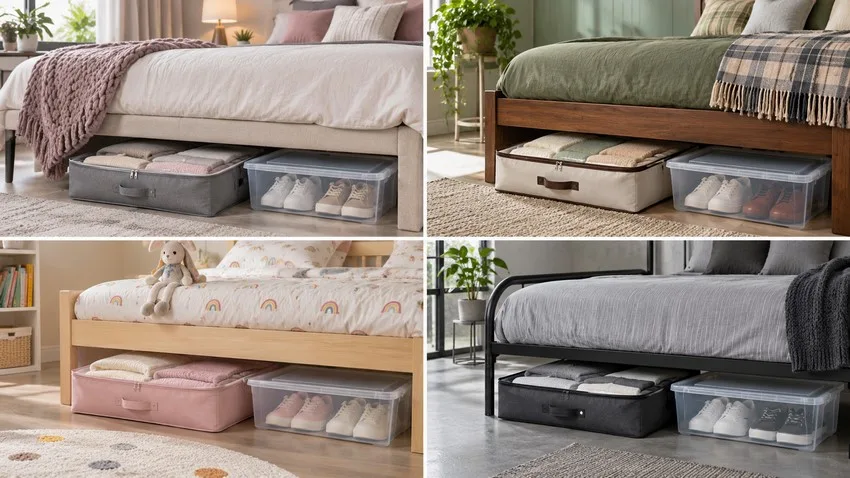
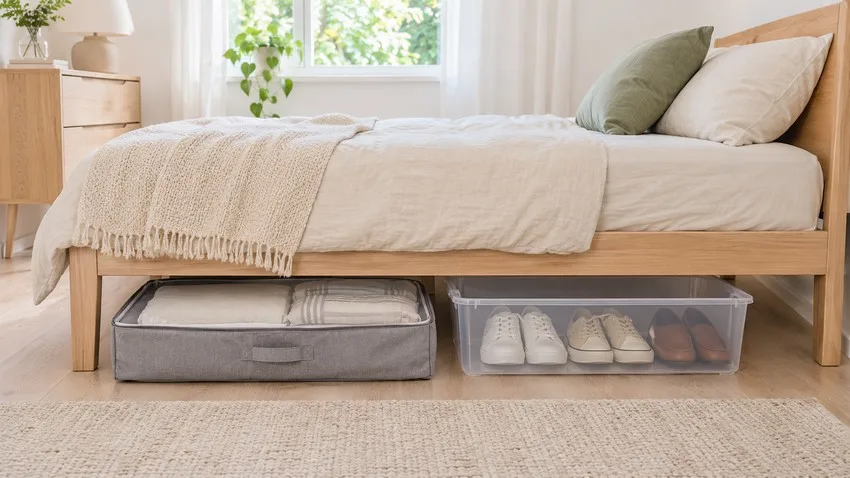
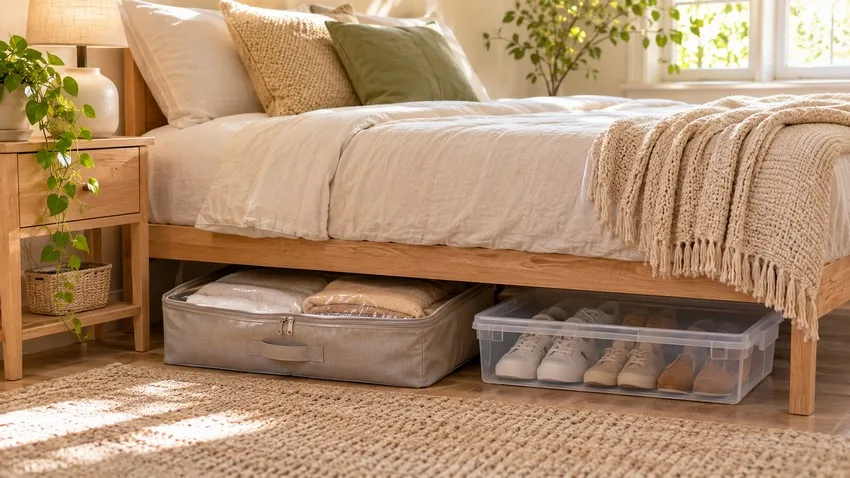
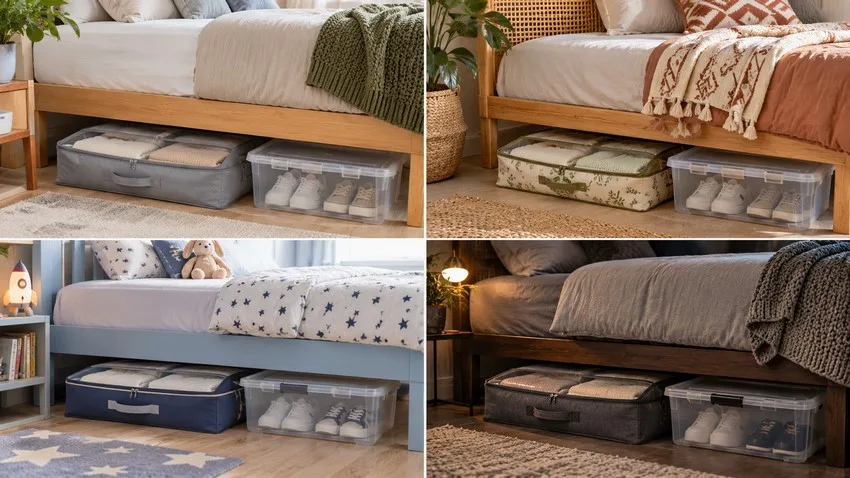
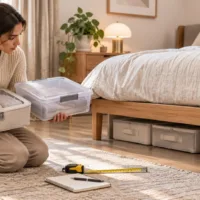
Choose fabric under-bed storage bags for lightweight clothes and bedding that you put away seasonally. Choose plastic bins when you need a rigid container, an easy-to-wipe interior or better separation between shoes and soft textiles. Neither type is automatically waterproof, airtight or suitable for a damp room.
The useful question is not which material is better in general. It is which container works with your belongings, floor and access routine. A large bag can become awkward when overloaded, while a solid bin can be frustrating if you cannot open its lid beside the bed.
This guide compares typical designs and the features to check before buying. It is not a hands-on product test. If you have not checked your available space yet, start with How to Choose Under-Bed Storage That Actually Fits.
Under-bed storage bags vs plastic bins at a glance
Typical differences; individual products vary
What matters
Fabric storage bags
Plastic storage bins
A useful starting point for
Seasonal clothing, spare sheets and lightweight blankets
Shoes, mixed items and belongings that need a stable container
Shape when filled
Can bulge or sag; reinforced versions hold their shape better
Rigid walls maintain the footprint, though lids can bow if overfilled
Cleaning
May require vacuuming or spot cleaning; check the care label
Usually easier to wipe inside and out; follow care instructions
Dust protection
Depends on zipper coverage, seams and ventilation panels
Depends on lid fit, gaps and any gasket
Moving beneath the bed
Depends on the base, load, handles and floor texture
Depends on the base or wheels, load and floor texture
Storage when empty
Collapsible designs take up less room
Requires space unless the empty bins nest together
A fabric bag is a practical starting point for clean, dry, soft belongings that you do not need every day. Examples include summer clothes during winter, a spare sheet set or a lightweight guest blanket.
The main advantage is flexibility between uses. A collapsible bag can be folded away when empty, which helps in a small apartment or rented room where spare containers would otherwise take up closet space.
However, “fabric bag” covers several constructions: thin nonwoven organizers, structured polyester cases and coated bags with clear plastic tops. They do not all breathe, clean or carry weight in the same way.
Look at the base and handles, not just the fabric
A reinforced base helps keep folded clothes in place as you move the bag. Without support, the middle may sag and the contents may shift toward the handle. Check how the handles attach and whether the manufacturer gives a load limit.
Pack only to the point where the zipper closes easily and the bag keeps a low, even profile. A soft lid that bulges upward can catch on the bed frame. Do not treat flexible sides as permission to squeeze an overfilled bag through a tight opening.
Check the cleaning instructions before ordering
A fabric exterior does not mean machine washable. For example, IKEA specifies vacuuming or a lint roller for its SKUBB storage case and says not to wash it. Removable panels, coatings and inserts can affect how other bags should be cleaned, too. Check the instructions for the exact model.
When plastic under-bed storage bins make sense
A rigid plastic bin is useful when the container needs to keep its shape as it moves. It can also make it easier to separate clean, dry shoes from bedding or to organize small belongings in removable dividers.
The smooth interior is generally more convenient to wipe than a fabric lining. Clear walls can save you from opening several containers to find one item, although a label on the accessible end is still helpful.
The trade-off is space. A rigid bin cannot fold flat, and the lid needs a workable opening path. A box that fits under the bed may still be inconvenient if a nightstand prevents you from retrieving it far enough.
Inspect the lid mechanism
Check whether you must remove the whole lid, release latches on both ends or lift a hinged section. Imagine doing that with the bin in its actual position beside the bed. A split lid can help with partial access, but only if the opening is large enough for the items you want to remove.
Latches hold a lid in place. They do not, by themselves, establish an airtight or waterproof seal. If sealing matters, look for an explicit manufacturer specification and details of the gasket and closure. Do not assume an ordinary under-bed box protects belongings from a leak.
Which is better for clothes, bedding and shoes?
Seasonal clothes: start with the weight and fabric care needs
For ordinary lightweight clothes in a dry bedroom, a zippered bag is often convenient. Divide garments into manageable groups rather than packing one huge bag so tightly that it becomes difficult to move.
A rigid bin may work better if you want separated compartments or regularly rearrange the contents. For heirloom clothing, antique textiles or valuable delicate garments, use preservation guidance specific to the item rather than choosing an everyday organizer on price alone.
Bedding: choose a container that closes without force
Spare sheets and thin blankets are straightforward candidates for bags. A bulky comforter is a different problem: it may exceed the available height in either a bag or bin. Do not force the closure or rely on a lid to keep an unsuitable load compressed.
If you are considering a vacuum bag inside the container, check the bedding manufacturer’s storage advice first, especially for filled items. Vacuum compression is a separate decision from choosing a fabric or plastic outer container.
Shoes: prioritize separation and cleaning
For several pairs of shoes, a wipeable bin with suitable dividers is a practical option. A purpose-made fabric shoe organizer can also work, but check the compartment sizes and cleaning instructions. Store footwear clean and fully dry, and keep it separate from bedding.
Dust, ventilation and moisture: what the material does not tell you
Both types can reduce dust settling directly on belongings when properly closed. Neither deserves a blanket “dustproof” claim based on its material alone. Check zipper ends, lid gaps, mesh sections and how the closure sits when the container is filled.
Likewise, fabric is not automatically breathable. A coated organizer with a plastic top behaves differently from a case with ventilation panels. Plastic bins also vary: an ordinary lid and a gasketed closure are different designs.
The Canadian Conservation Institute advises keeping textiles clean and dry in a cool, dark, dry storage location with good ventilation. For everyday bedding and clothes, the practical lesson is to let items dry completely before packing and avoid using a container to hide a damp-storage problem.
If you notice condensation, dampness or a persistent musty smell beneath the bed, move the belongings to a suitable dry location and investigate the cause before returning them. Changing from a bag to a bin is not a substitute for addressing the room conditions.
Carpet, hard floors and frequent access
On carpet, a loaded fabric bag may drag or bunch up, while small wheels can sink into a deep pile. A wheeled bin is therefore not automatically the easiest option. Consider the carpet thickness, wheel size, base design and how much you intend to store.
On hard floors, check for rough edges, exposed fasteners or grit beneath either container. Wheels and bases should be suitable for the floor finish. Keep the route clean and follow the flooring manufacturer’s care advice.
For items you retrieve weekly, prioritize a reachable handle and an opening you can use without moving furniture. For seasonal storage, a foldable case may be more convenient overall, even if it takes slightly longer to open. In both cases, a smaller, manageable load is often easier than one oversized container.
A simple way to decide before buying
Name the contents. “Two spare sheet sets” is more useful than “bedroom clutter.”
Choose the required structure. Decide whether soft sides are acceptable or the contents need a stable base and walls.
Plan access. Check the handle position and whether you can use the zipper or lid in the available aisle.
Check care and closure details. Confirm cleaning instructions, load guidance and any claimed seal.
Verify the filled size. Use complete external dimensions, including the lid and wheels, and allow for a fabric bag’s possible bulge.
Start with one container. Check how it works with your actual belongings and floor before ordering a matching set.
You can also use both types: one bag for spare bedding and a separate bin for shoes. There is no need to choose the same material for every space beneath the bed.
Frequently asked questions
Are plastic bins better than fabric bags for under-bed storage?
They are better when you need rigid walls, a wipeable interior or separated compartments. Fabric bags can be more convenient for lightweight seasonal textiles and for folding away when empty. The closure, base and access route matter as much as the material.
Can I store clothes in plastic bins under the bed?
Ordinary clean, fully dry clothes can be stored in a suitable bin in a dry bedroom. Follow garment care advice, avoid overpacking and check the contents periodically. Valuable or historic textiles may need a specialist storage approach.
Will fabric storage bags keep dust out?
A closed bag can reduce dust exposure, but protection depends on its zipper, seams, panels and condition. Do not assume that every fabric organizer is dustproof or pestproof.
Are under-bed storage bags washable?
Some are; others are not. Check the manufacturer’s instructions for the exact bag, including any removable inserts. Do not assume a fabric case can go in a washing machine.