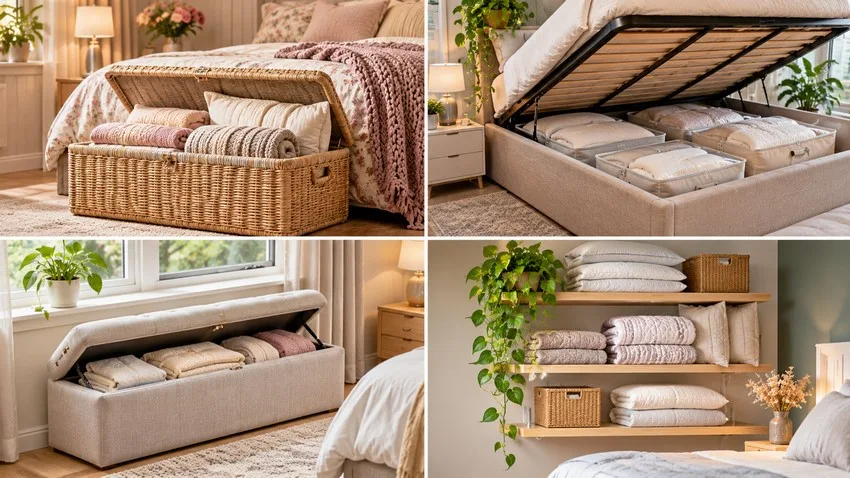
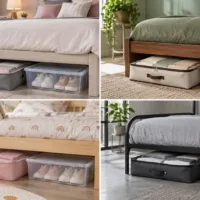
To store bedding in a small bedroom, keep your next clean sheet set within easy reach and move bulky, rarely used items into a separate storage area. A dresser drawer can hold everyday linens, while a suitable under-bed container or a dry closet shelf can hold seasonal bedding. Choose the space around the item rather than squeezing everything into one large bag.
You do not need a linen closet to keep spare bedding organized. You do need a system that lets you change the bed without unpacking a comforter, moving shoes or emptying an entire shelf.
Start with the bedding you actually use, then decide where each group belongs. Buying matching organizers comes later.
Sort your bedding into three groups first
Lay out your spare sheets, pillowcases, duvet covers, blankets, comforters and pillows. Check which pieces belong together and which fit a bed you still use. A full-size sheet set that fits neither your current bed nor your guest bed should not automatically get the best storage space.
Regular rotation: the clean sheets, pillowcases and covers you reach for at the next change.
Occasional use: guest bedding and an extra blanket for cooler nights.
Seasonal storage: a heavier comforter, spare filled pillows or bedding used only during part of the year.
There is no single correct number of spare sets. Base your supply on your laundry routine, drying time and household needs. Keep enough to cover realistic changes, but review incomplete sets and unused duplicates before assigning them a permanent home.
Match each type of bedding to a practical storage spot
A starting plan for a bedroom without a linen closet
Bedding
Possible storage spot
Main check
Sheets and pillowcases in regular use
An accessible dresser drawer or reachable closet shelf
Can you remove one set without disturbing the others?
Spare duvet covers and light blankets
A covered shelf basket or shallow under-bed organizer
Can it close without an overfilled, bulging top?
Guest bedding
A labeled bag or dedicated section of a drawer
Are the correct sizes grouped together?
Bulky comforters or duvet inserts
A dry closet shelf or roomy storage case
Does the storage method follow the filling manufacturer’s advice?
Spare filled pillows
A clean, roomy cover on a suitable shelf
Can you store them without forcing or sharply bending the filling?
The best location is one you can use comfortably. A high shelf is not useful for frequent changes if reaching it requires moving furniture. A container beneath the bed is not convenient if a nightstand blocks its handle.
Keep everyday sheet sets together
Choose one drawer or a clearly defined section of a shelf for bedding in regular rotation. Fold the pieces into a size that suits that space, rather than following a folding method that leaves you with an awkward stack.
For ordinary washable linens, you can place the matching folded sheets and remaining pillowcases inside one pillowcase. Keep the bundle loose enough to remove easily. This is an organizing method, not a requirement for delicate or historic textiles.
If the bundle becomes too thick, use a divider or a labeled shelf section instead. A duvet cover may need its own place. The aim is to find the right pieces quickly, not to fit every matching item inside the smallest possible package.
Label by bed size or room when similar colors make sets difficult to distinguish. In a shared household, “Guest — Queen” is more useful than an unmarked beige bag.
Use under-bed storage for light, occasional-use bedding
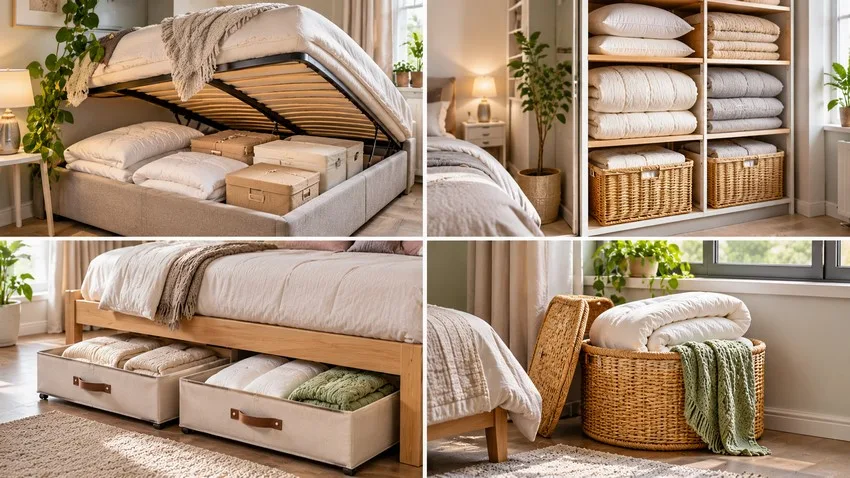
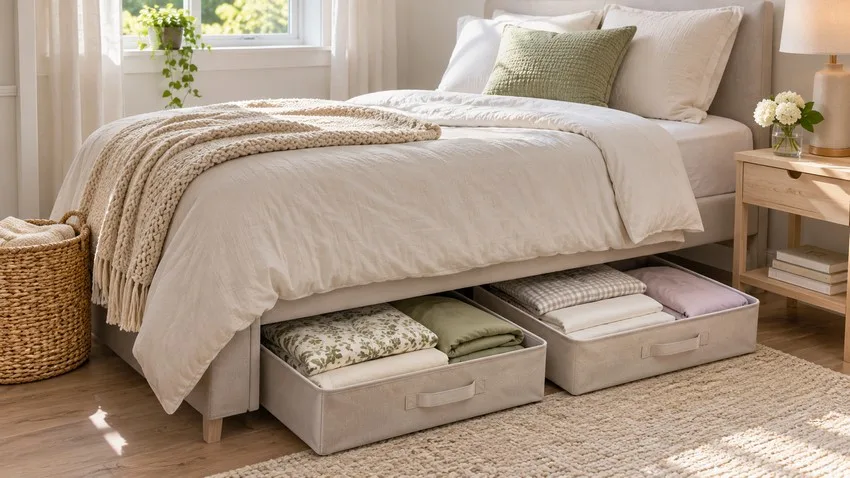
The space beneath a bed can work well for spare sheet sets, duvet covers and thin blankets. Choose a closed container that suits the contents and stays accessible from the side or foot of the bed.
Before ordering, check the lowest entry point, support legs and the space needed to pull the container out. Our guide to choosing under-bed storage that actually fits explains those measurements in detail.
Keep bedding separate from footwear and items that may carry dirt or odors. Use manageable loads, and leave the bed’s moving mechanisms and any manufacturer-specified clearances unobstructed.
A flexible case can be convenient for soft, lightweight items. A rigid container may be easier to wipe clean and move without changing shape. For the practical differences, see our comparison of under-bed storage bags and plastic bins.
Do not assume that every comforter belongs beneath the bed. A shallow space that works for sheets may be unsuitable for a lofty filled item.
Give bulky comforters and spare pillows enough room
A comforter or duvet insert has different storage needs from an empty duvet cover. The insert contains filling; the cover is a removable fabric layer. Keep that distinction in mind when reading advice about folding or compression.
Follow the care and storage instructions for your particular filling. Down bedding manufacturer Hamvay-Láng, for example, recommends storing a down comforter loosely in a breathable cotton bag and avoiding compression. That is a reason to check the product’s advice, rather than treat all bedding as suitable for vacuum storage.
A roomy bag on a dry closet shelf may work better than forcing a thick comforter into a low organizer. Choose a shelf you can reach safely, and do not build an unstable pile above it.
For spare pillows, identify the filling before packing. Foam, latex, down and fiber-filled designs should not be assumed to tolerate the same folding or compression. If the instructions do not address storage, ask the manufacturer before tightly compressing the item.
Should you use vacuum bags for bedding?
Vacuum bags can reduce the space some items occupy, but they are not the default answer to a small bedroom. Check whether the bedding manufacturer permits compression, and follow the bag’s instructions as well.
Before using one, ask:
Is this an unfilled fabric item or a filled comforter or pillow?
Does its manufacturer allow vacuum compression?
Is every part completely dry before sealing?
Will the packed bag be easy to retrieve without catching on the frame or a sharp edge?
If the instructions advise against compression, use a larger storage space or reduce the number of unused items you keep. Do not solve a fit problem by forcing the filling into a method it was not designed for.
Make use of furniture you already have
A dresser drawer
Try rearranging one drawer before buying another piece of furniture. A shallow drawer can be useful for sheets and pillowcases, while a deeper one may hold a light blanket. Keep bundles below the drawer’s usable height so they do not catch when it closes.
A closet shelf
Reserve the most reachable section for regular-use linens. Put lighter seasonal items higher only when you can retrieve them safely. Avoid pressing bedding against a damp or condensation-prone wall.
A storage bench or ottoman
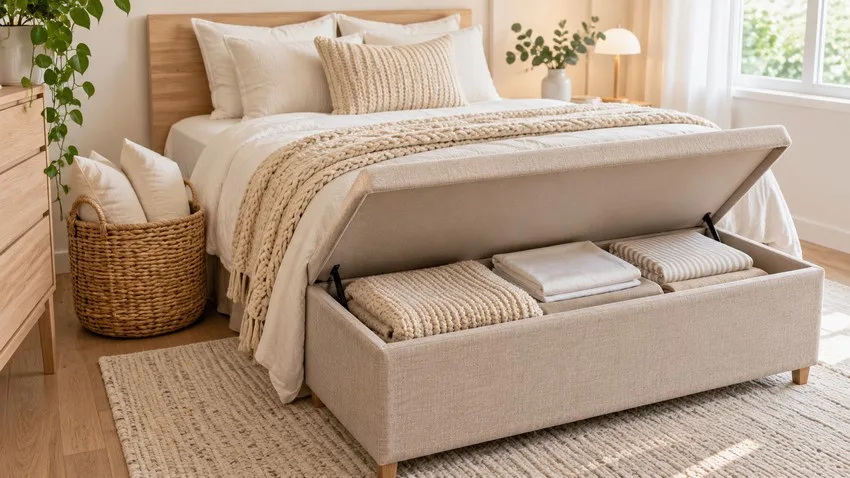
If you already own one, check that its interior is clean and dry and that the lid closes freely. For a new purchase, measure the walking space and opening path first. A bench that blocks a wardrobe or makes it difficult to move around the bed creates another problem.
Use the furniture’s specified load limits and care instructions. Do not assume an upholstered exterior means the interior is suitable for every type of bedding.
A worked example: one bedroom, no linen closet
Imagine a small bedroom with a dresser, a narrow closet shelf and two accessible spaces beneath the bed. The household has one spare everyday sheet set, one guest set, a light blanket and a winter comforter.
Dresser drawer: the next clean everyday sheet set, ready for a quick change.
One under-bed case: the labeled guest set and light blanket, provided they fit without overpacking.
Closet shelf: the winter comforter in a roomy cover, following its manufacturer’s storage advice.
Second under-bed space: left available until there is a clear need for it.
This is an example layout, not a required inventory. Its useful feature is that changing the bed does not involve moving seasonal bedding, and bulky filling is not forced into a shallow space.
Keep stored bedding clean, dry and easy to check
Prepare ordinary washable bedding according to its care label and let it dry completely before packing. Clean the storage area and container, too, allowing any cleaned surfaces to dry before adding linens.
The Canadian Conservation Institute emphasizes clean, dry textiles and a suitable dry storage environment. Its detailed guidance concerns conservation; antique quilts and other fragile pieces need more specific care than ordinary household bedding.
Check stored items when you rotate bedding or change seasons. If you notice dampness, condensation or a persistent musty smell, move the items to a suitable dry location and investigate the cause. A scented sachet or a different box does not fix a damp space.
Frequently asked questions
Where should I store bedding if I have no linen closet?
Start with a dresser drawer for regularly used sheets, a suitable under-bed case for occasional-use linens and a dry closet shelf for bulkier items. Choose locations that match access needs and the bedding’s care instructions.
Can I store sheets inside a pillowcase?
Yes, for ordinary clean, dry linens, a matching pillowcase can keep a set together. Avoid overstuffing it. Use a separate arrangement for delicate textiles or pieces requiring specialist preservation.
Can a comforter go under the bed?
Only if the space and storage case accommodate it in a way permitted by its manufacturer. A low opening may work for sheets but leave too little room for a bulky comforter without excessive compression.
How many spare sheet sets should I keep?
Keep enough for your laundry and drying routine, overnight guests and expected changes. Review what you actually use before buying organizers; a fixed number will not suit every household.